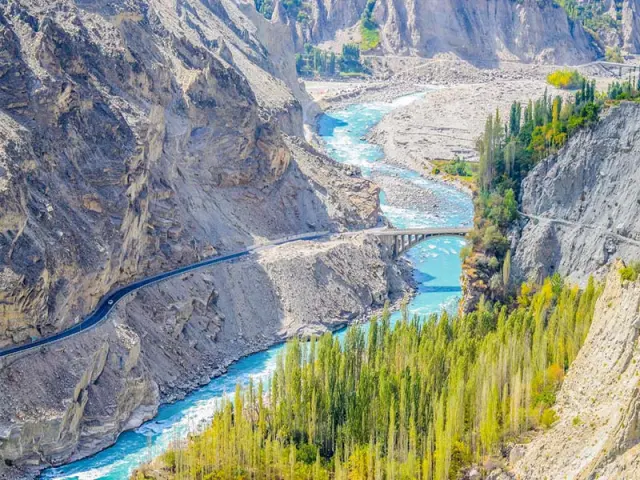
Before You Trek in Pakistan: Permits, Guides, Rescue and Mountain Risks
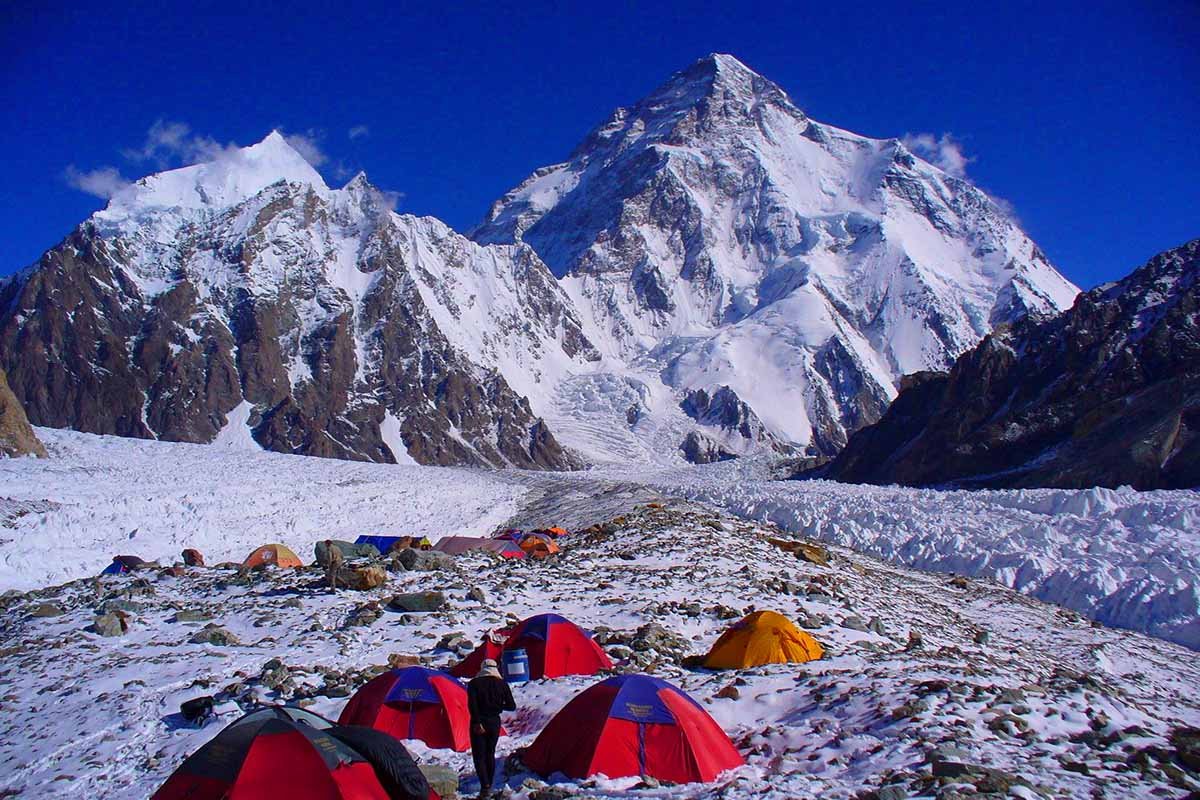
By Imtiyaz Ahmed Shigri, founder of Chogori Adventure, Skardu · Updated November 2026
Most trekking in Pakistan happens in Gilgit-Baltistan, the mountain region in the far north with K2, Skardu, Hunza and Nanga Parbat. The main risks on these treks come from the mountains themselves: altitude, glaciers, rockfall, river crossings, sudden weather and long distances from a road or hospital. This guide explains how treks are organised, which permits you need, why a licensed guide is required on many routes, how altitude works, how rescue and insurance work, and what we provide on every trek. Read it before you choose a route, and ask us anything it does not answer.
We have run treks in these mountains since 2015, with more than 3,000 customers on more than 500 trips. No high-altitude trek is free of risk, and we will not promise you otherwise. What we can do is explain the risks plainly and plan for them.

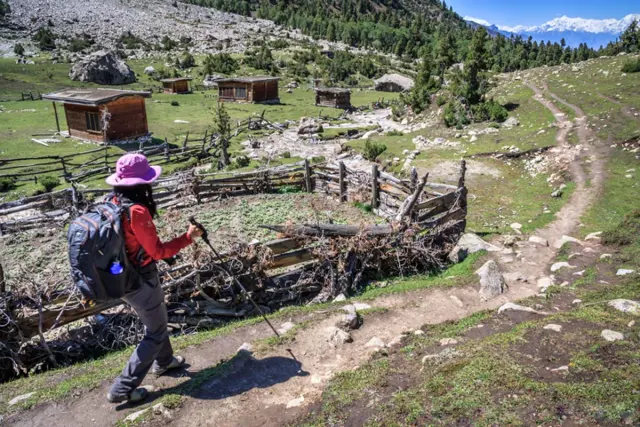
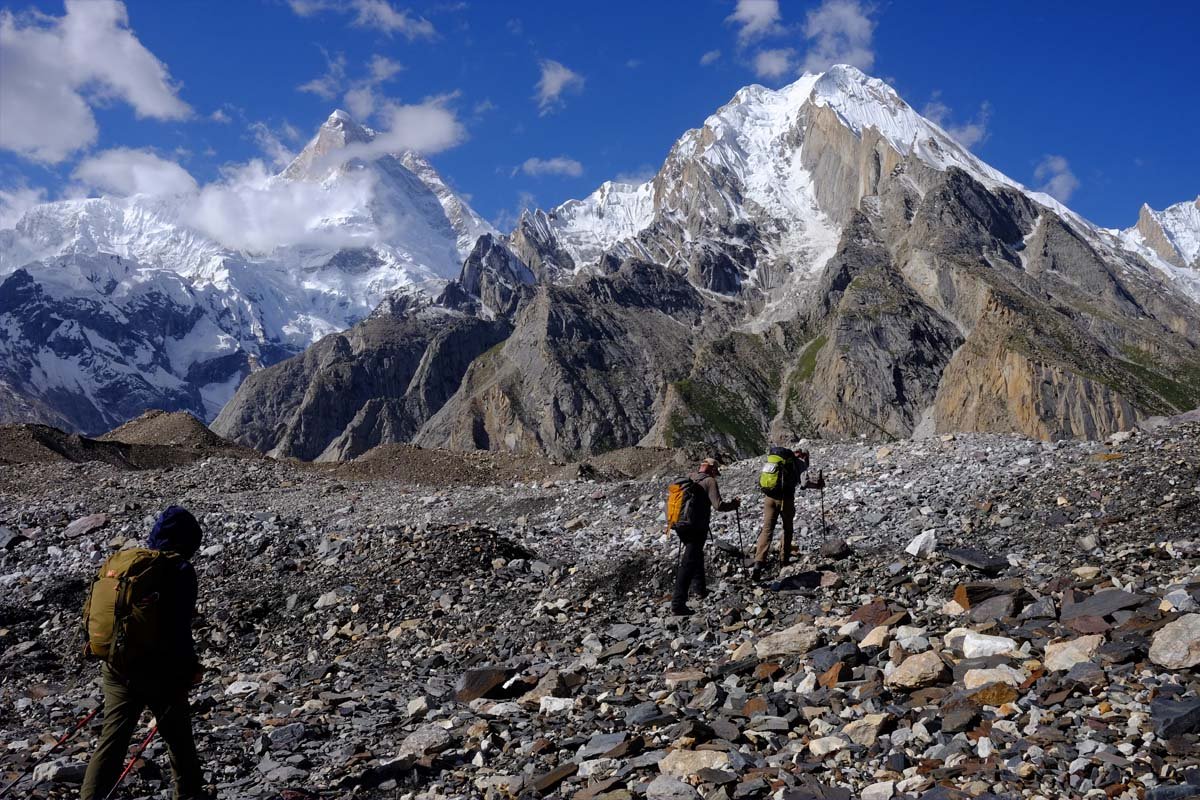
Porters and pack horses on the K2 Base Camp route.
The short answer
- Where: most treks are in Gilgit-Baltistan: the Baltoro to K2, Hushe and the Gondogoro La, Snow Lake, Hunza and Nagar, and Nanga Parbat.
- Rules: treks must be registered, restricted areas need a permit, and a licensed guide and porter are mandatory there.
- Main risks: altitude, glaciers, rockfall, river crossings, weather, flight cancellations and remoteness.
- Rescue: by army helicopter; payment may be needed in advance, so you need insurance that covers it.
- Check first: read your own government's current travel advice for every place on your route, and learn from people who have already done the trek.
- Your part: honest fitness and health, the right insurance, spare days and a slow climb.
Where treks go
The best-known routes are all in Gilgit-Baltistan, and most begin in Skardu, Hunza or the Nanga Parbat area:
- Skardu and the Baltoro: the K2 Base Camp Trek, the K2 Gondogoro La Trek and the Snow Lake, Biafo and Hispar La Trek all start with a flight or drive to Skardu and a jeep ride to Askole.
- Nanga Parbat: the Fairy Meadows Trek and the Nanga Parbat Base Camp Trek start from the Karakoram Highway at Raikot Bridge.
- Hunza and Nagar: the Rush Lake Trek and the Rakaposhi and Nanga Parbat Base Camp Trek; see also our Hunza Valley guide.
- Hushe and Shigar: the Nangma Valley Trek, the Laila Peak Base Camp Trek and the Thallay La Trek.
For an overview of the routes, read our 10 best treks in Pakistan; if this is your first trek, start with our beginner-friendly treks.
How trekking is organised in Gilgit-Baltistan
The Gilgit-Baltistan tourism department says that all trekking and mountaineering in the region must be registered with it, and that treks in restricted areas need a permit before you set off. Restricted areas include the high routes near the borders, such as the Baltoro to K2. In practice, your tour operator handles the paperwork for you.
Permit steps
- Your visa is granted (most visitors apply online through the Pakistan Online Visa System).
- Your operator submits the online trekking application.
- The royalty and environment fees are paid in Pakistan.
- Proof of insurance is submitted.
- The permit is issued, and you are briefed before the trek.
Documents the operator needs
- An application from the tour operator on its letterhead
- A route map of the trek
- Passport copies of every trekker
- Your filled-in visa application form
- Your occupation
- A copy of the operator's licence
- Receipts for the trekking fee and the waste management fee
Because the process takes time, book early, especially for July and August departures. Missing permits can also affect your insurance.
Registration and checkpoints
Foreign visitors register with the local authorities in Gilgit-Baltistan, and your guide carries copies of your permits. Checkpoints are a normal part of road travel in the north; keep your passport and permit copies with you, and let your guide do the talking.
Photography
Photography is banned within 5 miles of the Line of Control, within 10 miles of the Wakhan corridor, and near military sites and sensitive border areas. On routes close to these zones, ask your guide before you take photographs.
Licensed guides and porters
In restricted areas, a licensed guide and porter are mandatory. Even where they are not, we do not recommend trekking alone in the Karakoram: trails can be faint on moraine, glaciers change every season, and help is far away. A local guide knows where and at what time of day streams can be crossed, where rockfall is common, and when to turn back.
A typical trekking team includes a guide, a cook and kitchen helpers, and porters or pack animals to carry the loads. Porters carry fixed loads under local rules, and good operators insure their staff and give them proper clothing and shoes for the high camps.
Altitude
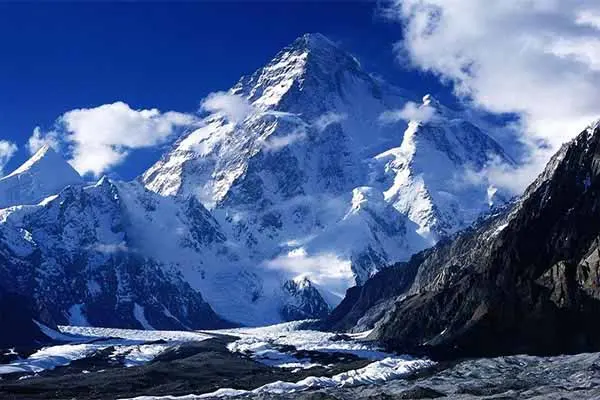
Altitude is the risk most trekkers underestimate. K2 Base Camp is at about 5,150 m and the Gondogoro La pass at 5,585 m, where the air holds about half the oxygen of sea level. Altitude illness can affect anyone, however fit, and in its severe forms (swelling of the brain or fluid in the lungs) it can kill.
Warning signs
- Mild: headache, usually with nausea, dizziness, tiredness, poor sleep or loss of appetite.
- Serious: confusion, poor balance, unusual drowsiness, breathlessness at rest or a wet cough. Go down at once.
How to acclimatise
- Above 3,000 m, raise your sleeping height by no more than about 500 m a night, as the Wilderness Medical Society recommends.
- Take a rest day every three to four days.
- Never go higher to sleep while you have symptoms, however mild. If they get worse, go down.
- Drink enough water, eat well and walk slowly: "slowly, slowly" is the rule on the trail.
- See a doctor who knows altitude before your trip, and ask about medicines that can help.
Compare any itinerary, including ours, with this pace. On the K2 Base Camp Trek, the itinerary includes a rest day in Skardu and a rest day at Paiju before the Baltoro Glacier.
High points of our treks
| Trek | Highest point | Our grade |
|---|---|---|
| Fairy Meadows Trek | Nanga Parbat Base Camp, about 3,950 m | moderate |
| Nangma Valley Trek | Amin Brakk base camp, about 4,500 m | moderate |
| Thallay La Trek | Thallay La, about 4,570 m | moderate |
| Laila Peak Base Camp Trek | Laila Peak Base Camp, about 4,680 m | moderate |
| Rush Lake Trek | Rush Lake, about 4,694 m | strenuous |
| K2 Base Camp Trek | K2 Base Camp, about 5,150 m | strenuous |
| Snow Lake, Biafo and Hispar La Trek | Hispar La, about 5,130 m | challenging |
| K2 Gondogoro La Trek | Gondogoro La, 5,585 m | challenging |
Our grades are compared with the K2 Base Camp Trek: moderate is less demanding than K2 Base Camp, strenuous is like it, and challenging is harder.
Glaciers, rockfall and river crossings
The Baltoro, Biafo and Hispar routes cross moving ice, moraine and glacial streams. Moraine is loose rock on top of the ice, and it shifts underfoot; on the Baltoro you walk on it for several days. Crevasses open on the upper glaciers, which is why the Snow Lake route is walked roped together with a guide.
Streams fed by melting ice rise during the day, so crossings are usually made early in the morning. Rockfall is common below steep slopes, especially in the afternoon when the sun loosens the rock. The Gondogoro La adds steep snow on both sides of the pass, and the crossing starts around midnight with fixed ropes looked after by a local rescue team.
Read our guides to K2 Base Camp difficulty and preparation, Gondogoro La difficulty and the best time for Gondogoro La.

Trekkers on the snow near the Gondogoro La at sunrise.
Weather, flights and roads
Snow can fall at any time at the high camps, even in July, and nights below freezing are normal above 4,000 m. In July and August, the monsoon reaches the lower valleys, and heavy rain can bring floods and landslides that close roads and bridges for a day or more.
The flight from Islamabad to Skardu takes about 1 hour 10 minutes, but it depends on the weather and is often cancelled. The road journey takes much longer, and landslides can close it too. Mountain roads are best driven in daylight. Our advice: keep two or three spare days at the end of your trip before your flight home.
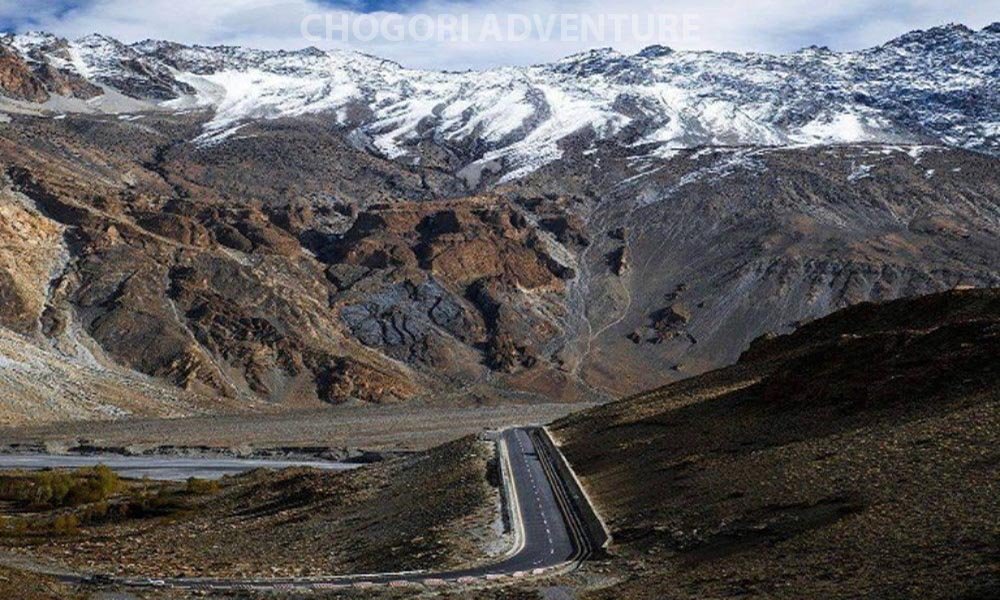
The Karakoram Highway in northern Pakistan.
Climbing is a different level of risk
This guide is about trekking. Climbing a peak, even a so-called trekking peak, brings new risks: steep ice, avalanches, crevasses and much higher altitude. Our expeditions carry extra equipment, such as a pulse oximeter and a portable altitude chamber (Gamow bag) at base camp, and require mountaineering insurance. Do not apply anything you read about trekking to a climbing expedition.
Rescue
On the Baltoro, the nearest road can be four or five days away on foot. Plan for rescue before you leave home:
- Who flies: mountain rescue in Pakistan uses army helicopters, not private rescue companies.
- Who pays: rescue is not free. Payment, or written confirmation of payment from your insurer, may be needed before a helicopter flies.
- Weather: helicopters cannot fly in cloud or strong wind, so you may have to wait, or be carried or walk down.
- Contact: on our high treks, the group always carries a satellite phone for emergencies, and our office in Skardu coordinates any rescue.
- In towns: Rescue 1122 runs emergency services in Gilgit-Baltistan; dial 1122.
A rescue can take hours or days to arrange, so the first response always comes from your own team: first aid, warmth, going down, and the satellite phone call.
Insurance
Under our Terms, insurance is mandatory on every trip, and it must cover trekking, high-altitude travel, evacuation and rescue, and medical costs. On our treks, rescue and insurance costs are not included in the price. Before you buy a policy, get these answers in writing from the insurer:
- Does it cover trekking up to the highest point of your route? Our K2 treks require cover up to at least 6,000 m; Fairy Meadows and Nanga Parbat Base Camp, up to 4,000 m.
- Does it name helicopter rescue and medical evacuation from remote areas?
- Will it pay for a rescue in advance, or confirm payment in writing?
- Does it cover every part of your trip, including the road sections and the days in Islamabad and Skardu?
- Does it cover trip cancellation and delays, such as cancelled flights to Skardu?
Check your own country's travel advice
Before you book, and again before you fly, read the travel advice that your own government publishes for Pakistan. Most governments publish this advice for their citizens, and it is the most important outside check you can make. We do not summarise or quote it here, because it differs from country to country and can change at short notice; only the current version from your own government counts.
Why it matters
- Your insurance: many policies do not cover travel to an area that your government advises against. If you travel there, your cover for medical costs and rescue may be void, even for an accident that has nothing to do with the warning.
- Your own decision: the advice is written for your nationality, and it is the official view of your own government. Read it, and decide with the full picture.
- Help abroad: your embassy or consulate is the office that helps its citizens in an emergency. Its advice page usually gives its contact details.
How to read it
- Find your government's official travel advice page for Pakistan. Use the official government website only, not a copy on another site.
- Check the date it was last updated, and any recent changes.
- Look at the advice region by region. Advice for one part of a country often differs from advice for another, so find every place on your route: Islamabad, Skardu, Gilgit, Hunza, the trekking area, and the road sections between them.
- Note any area your government advises against travelling to, or advises against all but essential travel to, and check whether any part of your route falls inside it.
- Read the sections on entry rules, health, local laws and customs, and natural hazards such as floods and landslides.
- Sign up for email updates, if your government offers them, so you hear about changes before you fly.
Then talk to your insurer and to us
Send your full route to your insurer and ask in writing whether every part of it is covered under your government's current advice. Then send us any questions the advice raises for your trek. If the advice changes after you book, contact your insurer and us at once; your options depend on your policy and on our Terms.
Learn from people who have already trekked here
Official advice tells you what your government thinks. People who have already done the trek can tell you what it was really like: the trail, the camps, the team and how problems were handled. Use both.
Where to find real experiences
- Reviews of the operator: read reviews on independent platforms such as Google, and read the low ratings as well as the high ones. Look for reviews with names and dates that describe a specific trek.
- Ask for past trekkers: ask your operator to put you in touch with people who did the same trek in a recent season. A good operator will ask its past guests and pass on their contact with their permission.
- Trip reports and videos: trekkers often write detailed reports or post videos of the Baltoro, the Gondogoro La or Fairy Meadows. They show the trail, the camps and the weather better than any brochure.
- Your own network: friends, trekking clubs and alpine clubs at home often have members who have trekked in the Karakoram.
What to ask them
- When did you go, and which route did you take?
- How did you feel at altitude, and how did the guide handle it?
- Were the permits, flights and roads organised as promised?
- Did anything go wrong, and what did the team do?
- How were the porters and staff treated?
- Would you go again, and with the same operator?
Read the dates carefully: a report from several years ago may describe trail, road or permit conditions that have changed. And remember that one person's trip is one experience; look for patterns across many reviews.
You can read our own reviews on Google: Chogori Adventure on Google. If you would like to speak with someone who has done your trek with us, ask us and we will try to connect you.

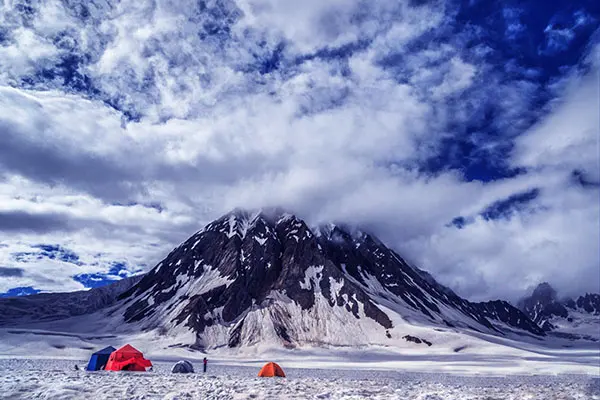
Camp at Snow Lake on the Biafo Hispar route.
Health
- Medical care: hospitals are in Skardu, Gilgit and Islamabad; on the trail, care is limited to first aid, which is one more reason to have evacuation cover.
- Food and water: drink boiled, filtered or bottled water, and avoid raw or undercooked food. Our cooks boil the water and prepare fresh meals at camp.
- Vaccines: ask your doctor about typhoid, hepatitis, rabies and polio. Longer stays can require proof of polio vaccination when you leave Pakistan.
- Your own kit: bring your personal medicines, blister care, sun cream and a good sun hat; the sun is strong at altitude.
- Tell us: our Terms ask you to disclose medical conditions before the trek, so the guide knows what to watch for.
Fitness and preparation
Most Karakoram treks mean 5 to 8 hours of walking a day, often on rough ground, for one to three weeks. Start training at least three months before you go: long walks with a loaded backpack, hill climbs or stairs, and some running or cycling for stamina. Walk in the boots you will wear on the trek.
Be honest about your experience. If you have never trekked above 3,000 m, start with a moderate trek such as Fairy Meadows or Nanga Parbat Base Camp before you try the Baltoro or the Gondogoro La.
The main risks, trek by trek
K2 Base Camp
About two weeks of walking, most of it on the moraine of the Baltoro Glacier, with nights above 4,000 m for about a week and a high point of about 5,150 m. The main risks are altitude, the long distance from a road (four or five days on foot from Askole), river crossings below Paiju and cold nights at Concordia. Graded strenuous; see the K2 Base Camp Trek.
K2 and the Gondogoro La
The same route to Concordia, then a crossing of the Gondogoro La (5,585 m) to Hushe. The pass adds steep snow, a night start, fixed ropes and rockfall on the descent, and some years the pass cannot be crossed because of snow conditions, so the group returns by the Baltoro. Graded challenging; see the K2 Gondogoro La Trek.
Snow Lake, Biafo and Hispar La
One of the longest glacier journeys outside the polar regions, with crevassed ice on the upper Biafo and the Hispar La at about 5,130 m. The group walks roped together on the glacier. Only for trekkers with high-altitude experience. Graded challenging; see the Snow Lake, Biafo and Hispar La Trek.
Rush Lake
A steep climb from Hopar in Nagar along the Miar Glacier to a lake at about 4,694 m. Short but high, so the pace of the climb matters more than its length. Graded strenuous; see the Rush Lake Trek.
Fairy Meadows and Nanga Parbat Base Camp
The least demanding of our treks, with the highest point at about 3,950 m. The main risks are the jeep road to Tato, which is narrow and exposed, and the steep path from the road head to Fairy Meadows. Graded moderate; see the Fairy Meadows Trek.
Nangma, Laila Peak Base Camp and Thallay La
Moderate treks from the Hushe and Shigar valleys, with high points between about 4,500 m and 4,700 m. They are shorter and less remote than the Baltoro, but still involve glacier moraine, stream crossings and cold nights. See the Nangma Valley Trek, the Laila Peak Base Camp Trek and the Thallay La Trek.
What a trekking day looks like
A typical day starts with tea at the tent around 6 am, breakfast at camp, and an early start while streams are low and the air is cool. You walk at your own pace with the guide, with rest stops every hour or so and a packed or hot lunch on the way. Porters and pack animals carry the loads and usually arrive at camp before you.
Most days end in early afternoon, which leaves time to rest, wash and acclimatise. In the evening, the guide checks how everyone feels, talks through the next day and watches for signs of altitude illness. This routine is part of how risk is managed: walking early, resting well, and talking openly about how you feel.
Emergency kit to pack
- A personal first-aid kit: blister care, painkillers, oral rehydration salts, and any medicines your doctor prescribes.
- A head torch with spare batteries, for night starts and late arrivals.
- Warm layers, a waterproof jacket and gloves, even in summer.
- Sunglasses with side protection (category 3 or 4) for glaciers and snow.
- Two water bottles or a hydration bladder, and water treatment tablets as a back-up.
- Copies of your passport, visa, permit and insurance policy, with the insurer's emergency number.
- A whistle and a small emergency blanket.
Respect local rules and culture
The mountains of Gilgit-Baltistan are home to Balti, Shina, Burusho and Wakhi communities, and the trails pass through their villages and summer pastures. Ask before you photograph people, dress modestly in villages, and follow your guide's lead at checkpoints and in mosques. Carry all your rubbish out: the waste management fee you pay with your permit supports clean-up on the main routes, but every trekker's own care matters more.
Women and solo travellers
On our treks you are never alone: every group walks with a guide and a team. A solo traveller can join a group departure or book a private trip.
- Tents and rooms: on our K2 treks, a woman travelling alone gets a separate room or tent. Check that it is confirmed for your trip.
- Dress: local custom is to dress modestly. Loose clothes that cover the shoulders and legs work well on the trail and in villages; women usually cover their head in mosques and at shrines.
- Before you book: ask who your guide will be, whether other women are on your departure, and who you can contact at our office if anything worries you.
When to turn back
The hardest decision on any trek is to turn back. On our treks, the guide makes the final decision, with the trekker, and always on the side of caution. The usual reasons are:
- Signs of serious altitude illness, or mild symptoms that get worse after a rest day.
- A swollen river that cannot be crossed in the morning.
- Fresh snow, avalanche risk or poor visibility on a pass such as the Gondogoro La.
- An injury that makes walking on moraine or snow too slow.
- A trekker who is too tired to reach the next camp before dark.
Turning back is not a failure. Most groups that cannot cross the Gondogoro La still see Concordia and K2, and a trekker who goes down with altitude symptoms often feels better within hours. Ask any operator how often its groups turn back, and why.
Before you fly
- Share your itinerary and your operator's contact details with someone at home.
- Save your insurer's emergency number and your policy number on your phone and on paper.
- Tell your operator about any allergies, medicines or medical conditions.
- Bring enough cash in Pakistani rupees or US dollars for tips and extra nights; cards are rarely accepted in the mountains.
- Keep your phone and power bank charged: mobile signal is weak or absent beyond Askole and on most high routes, where the group's satellite phone takes over.
How to choose a trekking operator
Check any company on Pakistan's official list of tour operators. Similar names are common, so match the exact name, phone number and website. Then ask these questions, and ask us too:
- Who decides if a trekker has to turn back, and on what signs?
- What medical training does the guide have, and what equipment does the group carry?
- Does every group have a satellite phone, and who answers the call at the other end?
- What are the rest days, and how does the sleeping height change each night?
- What happens if a flight is cancelled, and who pays for extra nights?
- Are porters insured and given proper gear?
- Have your groups had accidents or rescues, and what happened?
What Chogori Adventure provides
Good planning reduces risk, but it cannot remove it. This is what our trek pages state; details differ by trip, so check the page for yours and confirm in writing.
- Team: a licensed, English-speaking guide, a cook and kitchen team, and porters or pack animals.
- Acclimatisation: rest days built into the high treks, such as Skardu and Paiju on the K2 Base Camp Trek.
- Emergency equipment: a satellite phone and a first-aid kit on our high treks.
- Permits: we apply for your trekking permit and handle registration.
- Changes: our Terms let us change an itinerary because of weather, health, altitude or government restrictions; read them before you pay.
If you have a question about risk on a particular trek, ask us before you book. We would rather give you a direct answer than a surprise.
A checklist before you book
- Choose a trek that matches your experience and fitness.
- Write down every place on your route, including the road sections.
- Read your own government's current travel advice for every place on your route.
- Read reviews and trip reports, and talk to someone who has done the trek.
- Get your insurer's written answers to the questions above.
- See a doctor who knows altitude, and be honest about your medical history.
- Get your operator's written plan for altitude, rescue, cancelled flights and roads.
- Keep two or three spare days before your flight home.
Frequently asked questions
Should I check my own government's travel advice before trekking in Pakistan?
Yes, before you book and again before you fly. Read it for every place on your route, region by region, because your insurance may not cover areas your government advises against. Use only the current version on your government's official website.
How can I find out what trekking in Pakistan is really like?
Read reviews with names and dates on independent platforms such as Google, read recent trip reports, and ask your operator to put you in touch with someone who did the same trek recently.
Do I need a permit to trek in Pakistan?
Yes, for most treks in the Karakoram. Gilgit-Baltistan's tourism department says all trekking must be registered with it, and treks in restricted areas, such as the Baltoro to K2, need a permit before you start. Your operator applies for you after your visa is granted.
Can I trek in Pakistan without a guide?
Not in restricted areas. The Gilgit-Baltistan tourism department says a licensed guide and porter are mandatory there. On open routes such as Fairy Meadows you are not required to take a guide, but we do not recommend walking alone in these mountains.
How high is K2 Base Camp?
About 5,150 m. On the K2 Gondogoro La Trek, the highest point is the Gondogoro La pass at 5,585 m.
How does helicopter rescue work in Pakistan?
Mountain rescue in Pakistan uses army helicopters, not private rescue companies. Rescue is not free: payment, or written confirmation of payment from your insurer, may be needed before a helicopter flies, and bad weather can delay it.
What insurance do I need for trekking in Pakistan?
A policy that names trekking up to the highest point of your route, helicopter rescue, medical evacuation from remote areas and medical costs. For our K2 treks, cover up to at least 6,000 m is required; for Fairy Meadows and Nanga Parbat Base Camp, up to 4,000 m.
Do your trekking groups carry a satellite phone?
Yes. On our K2, Gondogoro La, Snow Lake, Nangma and Laila Peak treks, the group always carries a satellite phone for emergencies, with a first-aid kit.
What is the main risk on a Karakoram trek?
The mountains themselves: altitude, glacier travel, rockfall, river crossings, sudden weather and the long distance from a road or hospital.
How fast should I climb to avoid altitude sickness?
Above 3,000 m, raise your sleeping height by no more than about 500 m a night, and take a rest day every three to four days. Never go higher to sleep while you have symptoms.
What happens if my flight to Skardu is cancelled?
Flights between Islamabad and Skardu depend on the weather and are often cancelled. Keep spare days in your plans; if there is no time to wait, the trip may continue by road on the Karakoram Highway.
Is there a separate tent for women travelling alone?
Yes. On our K2 treks, a woman travelling alone gets a separate room or tent. Check that it is confirmed for your trip when you book.
What should women wear on a trek in Pakistan?
Loose, comfortable clothes that cover the shoulders and legs. On the trail, normal trekking clothes are fine; in villages, towns and mosques, a scarf for the head is respectful.
Can I take photos anywhere in Gilgit-Baltistan?
No. Photography is banned within 5 miles of the Line of Control, within 10 miles of the Wakhan corridor, and near military sites and sensitive border areas. Ask your guide when in doubt.
How do I check that a tour operator is licensed?
Look for the company on the official list of tour operators on the Pakistan Online Visa System site, and match the exact name, phone number and website. Ask for its licence number.
When is the trekking season in Pakistan?
For the high Karakoram treks, mostly June to September; for lower treks such as Fairy Meadows, from May to October or early November.
What vaccines do I need for Pakistan?
Ask your doctor or a travel clinic. Typhoid, hepatitis A and B, rabies and polio are commonly discussed, and long stays can require proof of polio vaccination when you leave Pakistan.
What if I get sick on the trail?
Tell your guide at once. Our guides decide with you whether to rest, go down or call for help. With altitude illness, going down is the main treatment.
Is there mobile signal on the K2 trek?
No. Mobile signal is weak or absent beyond Askole, and the Baltoro has none; on our high treks, the group carries a satellite phone for emergencies.
Who decides if a trekker must turn back?
On our treks, the guide makes the final decision with the trekker, based on altitude symptoms, injury, weather and river or snow conditions, and always on the side of caution.
Which trek is the least demanding?
Fairy Meadows, with its highest point at Nanga Parbat Base Camp at about 3,950 m, is the least demanding of our treks. See our guide to beginner-friendly treks.
Planning a K2 trek? See all our K2 treks, prices and guides in one place: the K2 hub.
About the author
Imtiyaz Ahmed Shigri founded Chogori Adventure in Skardu in 2015. Our guides are local, government-licensed and English-speaking, and most of them are trained in first aid. We are licensed by the Department of Tourist Services (licence no. 2494) and the Gilgit-Baltistan tourism department (licence DTS-GB-055), and we are a member of the Pakistan Association of Tour Operators, with offices in Skardu and Islamabad.
Rated 4.9 out of 5 from 47 reviews on Google (November 2026). Read our reviews on Google